


Couldn't load pickup availability
Free delivery over $125
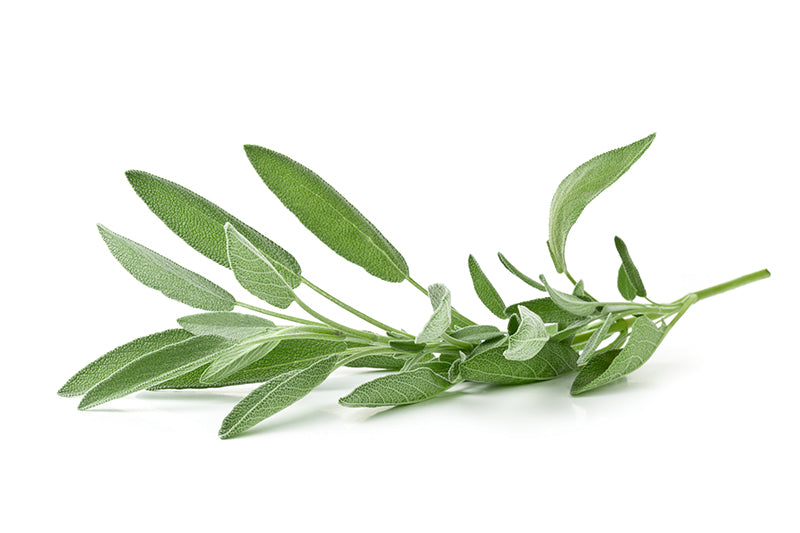
Fresh Sage
Nutrient-dense, Powerful Flavor
Nutrient-dense, Powerful Flavor
Fresh Herbs - Mmm
Sage should be used sparingly as its flavor can overpower other flavors. Sage can be used fresh though it is often used in cooked applications. Chop fresh leaves for herbed rubs, marinades and dressings. Add fresh leaves to clarified butter for tossing with pastas or blanched vegetables. The aromatic herb pairs well with pork, sausage, and lamb as well as poultry and strong cheeses.
Sage is an excellent source of vitamin K and a source of fiber, calcium, iron and manganese. The nutrient-dense herb also contains copper, magnesium, zinc, and omega-3 fatty acids as well as trace amounts of some B-complex and A vitamins, folate, vitamins C and E, beta-carotene, lutein and zeaxanthin. Sage leaves contain flavonoids, volatile oils that include terpines, rosmarinic acid, tannins, camphor, salvene, cineol and pinene.
Sage is an excellent source of vitamin K and a source of fiber, calcium, iron and manganese. The nutrient-dense herb also contains copper, magnesium, zinc, and omega-3 fatty acids as well as trace amounts of some B-complex and A vitamins, folate, vitamins C and E, beta-carotene, lutein and zeaxanthin. Sage leaves contain flavonoids, volatile oils that include terpines, rosmarinic acid, tannins, camphor, salvene, cineol and pinene.
The source
